
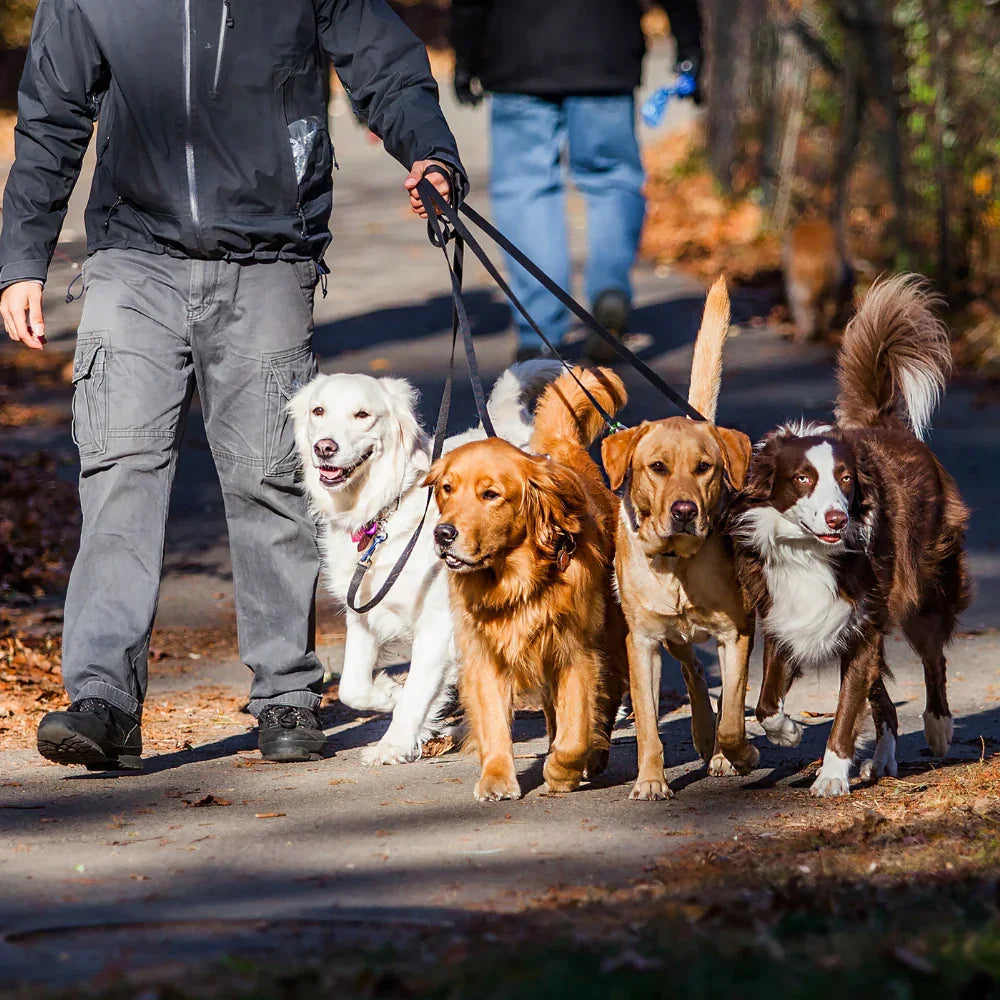
What Dog Lead Is the Best
If you are searching for the best dog lead in the UK, here is the truth.
There is not one best option for every dog.
The right lead depends on your dog and how you walk. Size. Strength. Behaviour. Where you walk. What you need control for.
Use this guide to pick a lead that actually suits your real walks.
Start with these 4 questions
Before you buy anything, answer these.
1. Does your dog pull
If your dog pulls, you need reliable control and secure hardware. You may also want a well fitted harness to reduce strain on the neck.
2. Where do you walk most
Busy streets need close control.
Parks and open spaces need flexibility.
3. What do you do on walks
Quick toilet breaks.
Everyday walks.
Training and recall.
Runs or hikes.
4. How often do you deal with rain and mud
In the UK, this matters. A lot.
Dog lead types and when they suit
Clip leads
Best for everyday walking.
Simple and reliable.
A good choice for calm walkers and routine walks.
Use a clip lead if:
You want a normal lead for day to day use
Your dog is fairly steady on lead
Slip leads
Slip leads can give quick control in specific situations.
Use a slip lead if:
You need a short, quick outing solution
You know how to use one safely and briefly
If your dog pulls hard, be careful with anything that tightens around the neck. A harness is often a safer choice for many dogs.
Training leads
Training leads are longer, or adjustable, so you can create space when you need it.
Use a training lead if:
You are working on recall
You want flexibility without swapping leads
You want more distance in open areas
Double or split leads
These help you walk two dogs at once.
Use a split lead if:
You have two dogs and want one hand free
Both dogs walk calmly without tangling
Traffic handles
A traffic handle is a very short control option. It helps you keep your dog close fast.
Use a traffic handle if:
You walk in busy areas
You need close passes near roads, people, or other dogs
Your dog gets excited and you want instant close control
Best materials for dog leads in the UK
Material changes comfort, cleaning, and control.
Biothane
Biothane is waterproof, easy to clean, and strong. It is a practical choice for wet weather and higher control needs.
Choose a biothane dog lead if:
You walk in rain, mud, or coastal areas
You want a lead that wipes clean
You want a firmer feel for dependable control
Rope
Rope leads feel softer in the hand and are comfortable for everyday walking.
Choose a rope dog lead if:
You want a softer grip feel
Your dog walks fairly steady
You prefer comfort for longer walks
Traditional fabric style leads
These are often chosen for appearance and lighter use. They can work fine, but they usually need more cleaning and may not suit heavy duty daily use.
Choose a fabric style lead if:
You want something lightweight
Your dog is calm and you walk mostly in clean areas
What length dog lead should you get
Length is about control and safety, not preference.
Shorter lengths for busy areas
Short leads help when you need your dog close.
Good for:
Town walks
Crowded pavements
Near roads
Close passes
Standard lengths for everyday walking
Standard lengths are common for normal day to day walking. They give enough space without losing control.
Good for:
Most routine walks
Most dogs that are steady on lead
Longer lines for training and decompression walks
Long lines are useful in open spaces when you want freedom with safety.
Good for:
Recall practice
Decompression walks
Sniff time in quiet areas
You still need awareness. Long lines can create risk near roads, cyclists, and other dogs.
Adjustable leads for flexibility
Adjustable leads cover more scenarios without switching leads.
Good for:
Owners who do a bit of everything
People who want one lead that adapts to location
Features worth having
These features were highlighted because they change real world handling.
A second handle near the clip
This helps you bring your dog close quickly without wrapping the lead around your hand.
Useful for:
Busy areas
Sudden distractions
Close control moments
Reflective details
Reflective stitching or trim helps visibility in low light.
Useful for:
Early mornings
Evenings
Winter walks
Hands free setups
Hands free leads can suit running and hiking, but they are not ideal if your dog pulls or is reactive.
Useful for:
Steady dogs
Owners who run or hike
Not ideal for:
Strong pullers
Dogs that lunge
Reactive dogs
Hardware that feels secure
Clips and connectors matter. Strong, reliable hardware reduces the chance of failure.
If you have a medium to large dog, this becomes non negotiable.
Training and safety basics
A lead is a communication tool
A lead is not just restraint. It is your connection to guide and manage situations.
If your dog pulls, consider a harness
Many trainers recommend a well fitted harness to reduce neck strain, especially for pullers.
Be cautious with retractable leads
Many trainers commonly discourage retractable leads because control is reduced and accidents can happen fast. They can be useful for specific needs, but they are not a first choice for most everyday walking.
Cleaning matters more than people think
Coated materials like biothane are easy to wipe clean.
Nylon and rope usually need a soak and a scrub, then air drying.
Where SLEDLINE fits in
SLEDLINE focuses on dependable control and durability for real world use, especially for medium to large dogs.
If your priority is a dog lead that holds firm, stays consistent in bad weather, and supports controlled walking, that is the lane SLEDLINE is built for.
FAQs: What Dog Lead Is the Best?
Q: What dog lead is best for everyday walking?
A: A clip lead is usually the best option for everyday walking. It offers a simple, secure connection and works well for routine walks. Choose the length and material based on where you walk and how steady your dog is on the lead.
Q: What dog lead is best for dogs that pull?
A: For dogs that pull, a strong lead with secure hardware is important. Many trainers also recommend using a well fitted harness to reduce strain on the neck. Shorter leads or traffic handles can help improve control in busy areas.
Q: Is biothane better than rope for a dog lead?
A: Biothane is better for wet weather, easy cleaning, and a firmer control feel. Rope leads are softer in the hand and comfortable for everyday walking. The better choice depends on your dog, your environment, and how much control you need.
Q: What length dog lead is best?
A: Short leads are best for crowded areas and close control. Standard length leads work well for everyday walks. Longer leads are useful for recall training and open spaces. Adjustable leads give flexibility across different walking situations.
Q: Are hands free dog leads a good idea?
A: Hands free dog leads can work well for running or hiking with steady dogs. They are usually not ideal if your dog pulls strongly or reacts suddenly, as they reduce immediate control.
Q: Are retractable dog leads safe?
A: Many trainers discourage retractable leads for everyday use because they reduce control and can increase the risk of accidents, especially in busy areas. They require extra awareness and are not suitable for all dogs.
FAQs About SLEDLINE
Q: What is SLEDLINE?
A: SLEDLINE is a dog gear business focused on building leads designed for dependable control and durability in real world walking conditions.
Q: What dogs are SLEDLINE leads best for?
A: SLEDLINE leads are best suited to medium to large dogs, particularly where strength, control, and reliability are important.
Q: What makes SLEDLINE different from other dog lead brands?
A: SLEDLINE focuses on material choice, secure hardware, and practical design built for daily use rather than trends or fashion led products.
Q: Are SLEDLINE leads suitable for everyday walks?
A: Yes. SLEDLINE leads are designed to handle daily walking across different environments, including busy streets and outdoor conditions.
Q: How do I choose the right SLEDLINE lead?
A: Start by looking at your dog’s size, strength, and behaviour, then consider where you walk most often. From there, choose the lead type, material, and length that best matches those needs.

